




Free delivery from 250€ for France
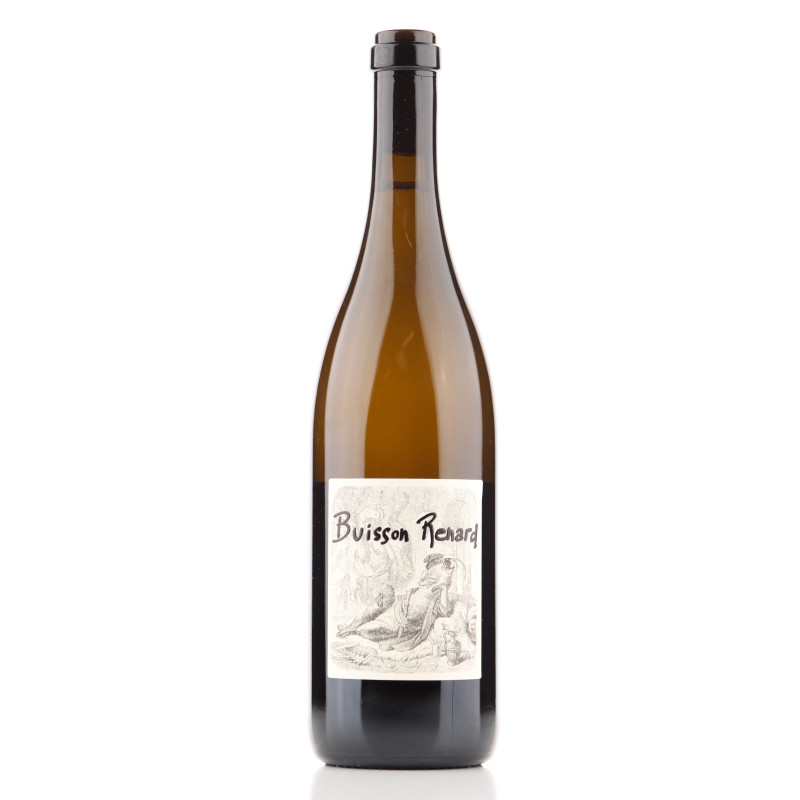
POUILLY FUME BUISSON RENARD 2023 DIDIER DAGUENEAU

POUILLY FUME BUISSON RENARD 2023 DIDIER DAGUENEAU

€130.00
Bouteille 75 cl
Livraison estimée entre le 10/11/26 et le 16/11/26
Tasting
icon_image_1728402326.svg
To the eye
The colour is a pale golden yellow with greenish highlights; it is bright and crystal-clear, revealing great purity and fine concentration.
icon_image_1728402369.svg
Nose
The nose is exceptionally intense, blending aromas of candied lemon, grapefruit, white peach, pear, exotic fruits and white flowers, complemented by notes of flint, gunflint, smoke, chalk, dried fruit and a delicate toasty hint imparted by the ageing process.
icon_image_1728402397.svg
Palate
On the palate, it is full-bodied, powerful and perfectly structured. The richness of the fruit is balanced by remarkable acidity and a salty minerality that lends it great vigour. Flavours of citrus, white fruit, damp stone and subtle spices linger on an exceptionally long, pure and highly elegant finish – the hallmark of Didier Dagueneau’s finest wines.
icon_image_1728402432.svg
Pairing
This 2023 Buisson Renard Pouilly-Fumé will perfectly complement roast lobster, pan-fried scallops, turbot in beurre blanc sauce, sole meunière or Bresse poultry in a creamy sauce. It will also pair elegantly with a truffle risotto, mature Comté or a matured goat’s cheese such as Crottin de Chavignol. To fully appreciate the richness and precision of this cuvée, we recommend serving it at between 11 and 12 °C after allowing it to breathe briefly.
icon_image_1714654135.svg
Aging potential
Although still very young, this 2023 Buisson Renard has an ageing potential of 15 to 25 years. Over time, it will develop aromas of honey, beeswax, dried fruit and white truffle, along with exceptional mineral complexity.
Features
  • Color White
  • Region Loire
  • Designation POUILLY FUME
  • Vintage 2023
  • Format Bouteille
  • Domain DIDIER DAGUENEAU
  • Capacity 75 cl

FREQUENTLY ASKED QUESTIONS

Is Buisson Renard 2023 more of a crisp white or a full-bodied, concentrated wine?

It combines both qualities: the grapes’ excellent ripeness brings concentration, while the freshness and mineral tension remain remarkable. It is therefore a good choice for anyone looking for a deep white wine without sacrificing liveliness.

Is this wine suitable if I’m looking for a Sauvignon Blanc that is especially expressive on the nose?

The description places greater emphasis on depth, precision, and mineral tension than on specific aromas. It is better chosen for its structure and complexity than for a particular aromatic profile, which is not detailed here.

Does aging in barrels mean that this wine is very oaky?

The extended aging in barrels is described as contributing to the wine’s depth and complexity. However, no notes specify the intensity of the oak, so this aging should not be equated with a dominant oaky taste.

What occasion should I choose this cuvée for?

Its concentration and precision make it a fitting choice for a thoughtful tasting, particularly alongside fine Loire whites. Its appeal lies in the balance of ripeness, freshness, and mineral tension, rather than in fruit expression alone.

What sets Buisson Renard apart beyond its Sauvignon Blanc grape variety?

Its identity also comes from old vines planted in the Kimmeridgian marls and flint soils of Saint-Andelain, as well as extended aging. When choosing it, focus above all on the profile described: a concentrated, precise white wine driven by strong mineral tension, rather than a simple varietal expression of Sauvignon.
Notes Parker

Le barème établi par Robert Parker évalue les vins sur une échelle allant de 50 à 100 points afin d’aider les consommateurs à choisir leurs bouteilles. La grille de notation est la suivante :


96 à 100 Une cuvée grandiose : niveau exceptionnel.

90 à 95 Belle complexité aromatique, bel équilibre : niveau excellent.

80 à 89 Grande intensité aromatique, finesse et équilibre : bon niveau.

70 à 79 Plaisant, peu de complexité : niveau moyen.

60 à 69 Quelques défauts perceptibles : niveau très moyen.

50 à 59 Détection de défauts, manque d'équilibre : niveau acceptable.