

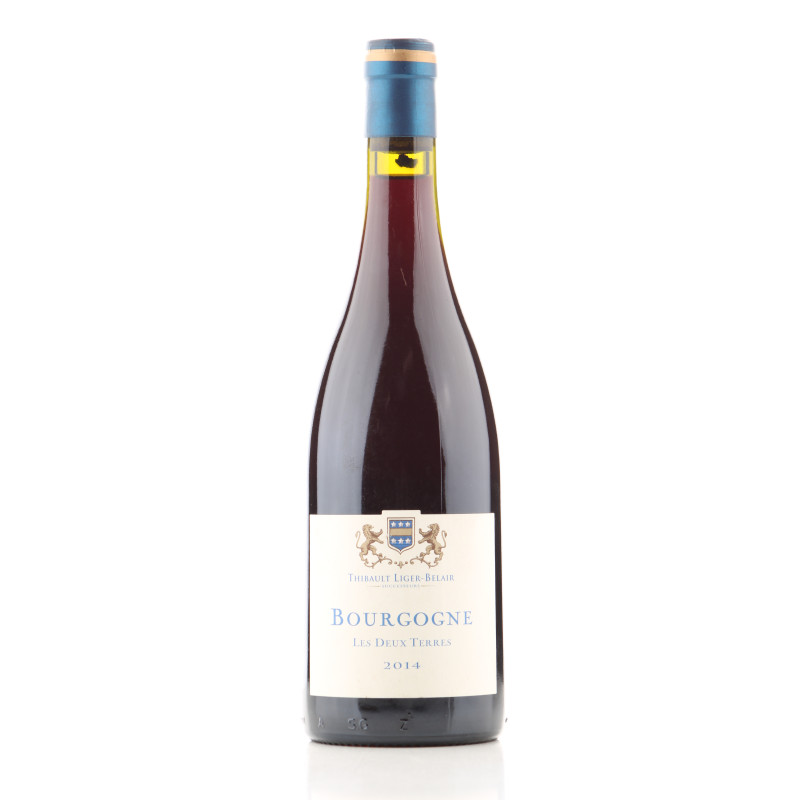
BOURGOGNE GAMAY LES DEUX TERRES 2014 THIBAUT LIGIER BELAIR

Une robe rubis brillante qui commence à témoigner de son évolution avec de discrets reflets grenat et tuilés sur le disque.

Très expressif et joliment patiné par le temps. Les arômes primaires de fruits rouges acidulés (groseille, cerise griotte) s'entremêlent avec de superbes notes florales de pivoine et de violette, signature du Gamay. À l'aération, des touches tertiaires de sous-bois et de poivre blanc apportent une belle complexité.

L'attaque est souple, croquante et désaltérante. La trame tannique est aujourd'hui parfaitement fondue et soyeuse. Le vin brille par sa tension et sa fraîcheur, typiques du millésime 2014, offrant un milieu de bouche digeste et fruité. La finale est délicate, épicée et très salivante.

Parfaitement polyvalent grâce à ses tanins fondus et sa belle acidité, ce Bourgogne Gamay est le partenaire idéal des repas conviviaux. Il sublimera une planche de charcuteries artisanales, un poulet rôti aux herbes, un filet de porc mignon aux champignons ou un pot-au-feu traditionnel. Côté fromages, accompagnez-le d'une tome de brebis, d'un Saint-Nectaire ou d'un Morbier. À servir légèrement rafraîchi, autour de 14-15°C.

Ce millésime 2014 a atteint son apogée absolue. Il offre actuellement sa pleine expression aromatique, mêlant habilement le fruit à ses premières notes tertiaires. Il convient de le déboucher et de le savourer dès à présent, sans attendre de garde supplémentaire.
- Color Red
- Region Burgundy
- Designation Bourgogne
- Vintage 2014
- Format Bouteille
- Domain THIBAULT LIGER BELAIR
- Capacity 75 cl






Ban on the sale of alcoholic beverages to minors under 18 years of age
Proof of majority of the buyer is required at the time of online sale
Le barème établi par Robert Parker évalue les vins sur une échelle allant de 50 à 100 points afin d’aider les consommateurs à choisir leurs bouteilles. La grille de notation est la suivante :
96 à 100 Une cuvée grandiose : niveau exceptionnel.
90 à 95 Belle complexité aromatique, bel équilibre : niveau excellent.
80 à 89 Grande intensité aromatique, finesse et équilibre : bon niveau.
70 à 79 Plaisant, peu de complexité : niveau moyen.
60 à 69 Quelques défauts perceptibles : niveau très moyen.
50 à 59 Détection de défauts, manque d'équilibre : niveau acceptable.