Livraison avant Noël : commandez jusqu’au lundi 14/12 en standard ou mercredi 16/12 en express Free delivery from 250€ for France
Filter by
Region
Domain
Designation
Vintage
Format
Color
Price
€ €
Filter
€10.00

Discover Dubreuil-Fontaine

The Dubreuil-Fontaine Estate, located in Pernand-Vergelesses, is a renowned family-run winery in the Burgundy region's Côte de Beaune. Managed today by Christine Gruère-Dubreuil, this historic estate founded in 1879 spans 20 hectares across several prestigious appellations. The estate is particularly known for its Pernand-Vergelesses wines but also has plots in Aloxe-Corton, Savigny-lès-Beaune, Pommard, and Volnay. Dubreuil-Fontaine reaches the pinnacle of Burgundy hierarchy with iconic Grand Cru vineyards like Corton-Charlemagne for whites and Corton Clos du Roi for reds.

Terroir and Characteristics

The estate's terroir consists of calcareous and clay-limestone soils with rolled pebbles, typical of the Côte de Beaune, benefiting from a temperate climate ideal for growing emblematic grape varieties such as Pinot Noir and Chardonnay. A sustainable viticulture approach and careful winemaking practices preserve the unique identity of each climat to perfectly express these exceptional terroirs.

Wine Profile

Dubreuil-Fontaine wines are known for their remarkable aromatic finesse, balanced structure, and excellent aging potential. The red wines offer delicate notes of red fruits and spices, showcasing the elegance typical of great Burgundy vintages. The white wines are precise, mineral-driven, and complex, evolving beautifully over time.

Food Pairings

Dubreuil-Fontaine wines pair perfectly with refined dishes such as Boeuf Bourguignon, aged Époisses cheese, sauced fish dishes, or roasted poultry. These pairings enhance the wines’ balance and elegance, elevating every tasting experience.

Our Dubreuil-Fontaine Selection

Discover the exclusive selection of Dubreuil-Fontaine wines on achetezduvin.fr, with fast and secure delivery. Our sommeliers have carefully selected these exceptional crus to enrich your cellar and reflect the traditional craftsmanship of Burgundy.

Afficher plus Afficher moins

Your questions, our answers.

Which appellations can be compared in this Dubreuil-Fontaine selection?

The selection brings together Bourgogne, Pernand-Vergelesses, Aloxe-Corton, and Savigny-lès-Beaune. Bourgogne La Chapelle Notre Dame represents the regional appellation, while the other wines offer a chance to explore several appellations of the Côte de Beaune.

Can you discover Pernand-Vergelesses in both red and white at Dubreuil-Fontaine?

Yes, Pernand-Vergelesses is represented by the Iles des Vergelesses wines in red, as well as by a white wine. The estate describes its reds as elegant, with notes of red fruit and spices, and its whites as precise and mineral: two expressions to compare within the same appellation.

Which older vintages are listed in the Dubreuil-Fontaine category?

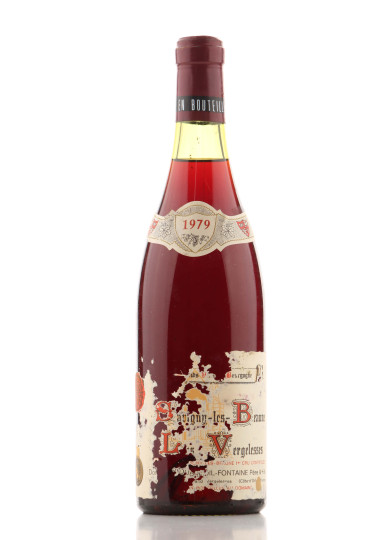
The older vintages listed are 1969 and 1979, with three wines from 1979. Savigny-lès-Beaune Les Vergelesses 1979 is specifically identified; the information provided does not make it possible to match the other older vintages to individual wines.

Which Dubreuil-Fontaine wines would you consider with roast poultry or fish in sauce?

For roast poultry, the reds in the selection, such as Aloxe-Corton or Bourgogne La Chapelle Notre Dame, are suitable options based on the pairings recommended for the estate. The white Pernand-Vergelesses is an option with fish in sauce, offering the precise, mineral profile described for the whites.

Are all seven items in this category wines from the estate?

No: the category includes six 75 cl bottles of Dubreuil-Fontaine wine, comprising five reds and one white. The seventh item is a green sommelier's corkscrew, listed as an accessory; green therefore does not refer to a wine colour.
Notes Parker

Le barème établi par Robert Parker évalue les vins sur une échelle allant de 50 à 100 points afin d’aider les consommateurs à choisir leurs bouteilles. La grille de notation est la suivante :


96 à 100 Une cuvée grandiose : niveau exceptionnel.

90 à 95 Belle complexité aromatique, bel équilibre : niveau excellent.

80 à 89 Grande intensité aromatique, finesse et équilibre : bon niveau.

70 à 79 Plaisant, peu de complexité : niveau moyen.

60 à 69 Quelques défauts perceptibles : niveau très moyen.

50 à 59 Détection de défauts, manque d'équilibre : niveau acceptable.