

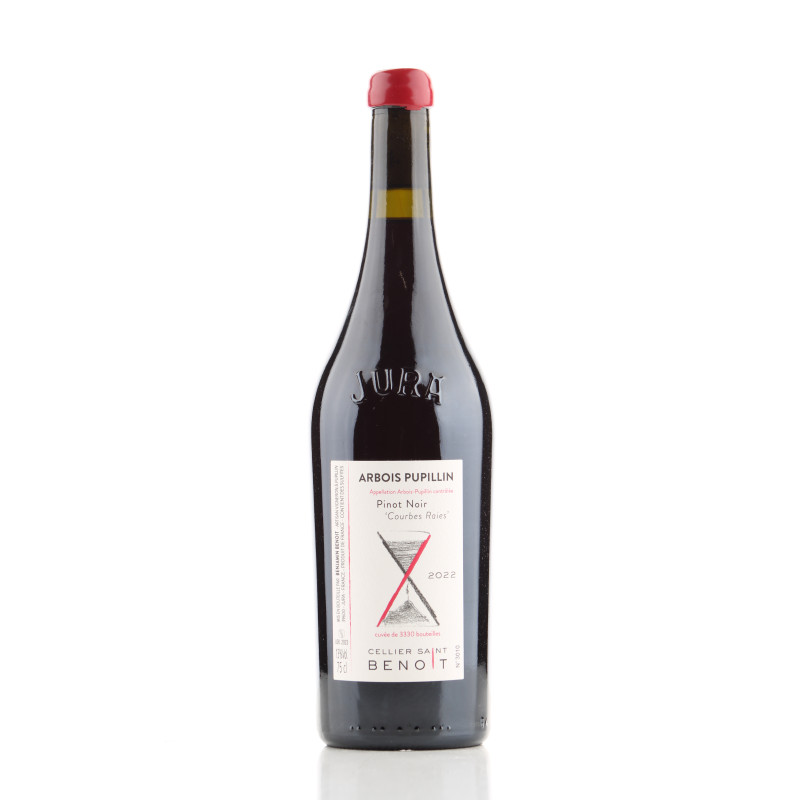
ARBOIS PUPILLIN 2022 CELLIER SAINT BENOIT
€48.00
Bouteille
75 cl
Tasting

To the eye
A beautiful light yellow colour, luminous and brilliant, with subtle golden and sea-green highlights.

Nose
Extremely pure and very expressive. It opens with aromas of orchard fruits (Reinette apple, crisp pear) and citrus (lemon, pomelo). As it breathes, elegant notes of white flowers (hawthorn) emerge, immediately underscored by a pronounced minerality reminiscent of wet rock and flint.

Palate
The attack is crisp, lively and crystal-clear. The wine then develops a full-bodied, beautifully textured palate, drawing on the generosity of the 2022 vintage, without ever losing its underlying acidity. The finish is crisp, lingering and remarkably briny, offering a sensation of great purity.

Pairing
This great regional white wine, with its crispness and brininess, is a superb choice for fine dining. It will bring out the best in a lovely trout with almonds, free-range chicken in cream sauce, a Jura-style fondue or pan-fried scallops. When it comes to cheese, the regional pairing is unbeatable: serve it with a fruity Comté aged between 12 and 18 months, a Morbier or a Mont d’Or. Ideal serving temperature: 11°C to 13°C.

Aging potential
Already very appealing today with its mineral brightness and crisp fruitiness, it is built to stand the test of time. It will age gracefully in the cellar for 5 to 8 years, developing rich notes of wax and fresh almond as it matures.
Features
- Color White
- Region Jura
- Designation ARBOIS
- Vintage 2022
- Format Bouteille
- Domain CELLIER SAINT BENOIT
- Capacity 75 cl

Wines selected
by our experts

Order and pay
securely

100% of the wines
in stock

Free delivery
from 250€ in France

Your favorite wines
at your fingertips

Ban on the sale of alcoholic beverages to minors under 18 years of age
Proof of majority of the buyer is required at the time of online sale
Le barème établi par Robert Parker évalue les vins sur une échelle allant de 50 à 100 points afin d’aider les consommateurs à choisir leurs bouteilles. La grille de notation est la suivante :
96 à 100 Une cuvée grandiose : niveau exceptionnel.
90 à 95 Belle complexité aromatique, bel équilibre : niveau excellent.
80 à 89 Grande intensité aromatique, finesse et équilibre : bon niveau.
70 à 79 Plaisant, peu de complexité : niveau moyen.
60 à 69 Quelques défauts perceptibles : niveau très moyen.
50 à 59 Détection de défauts, manque d'équilibre : niveau acceptable.