

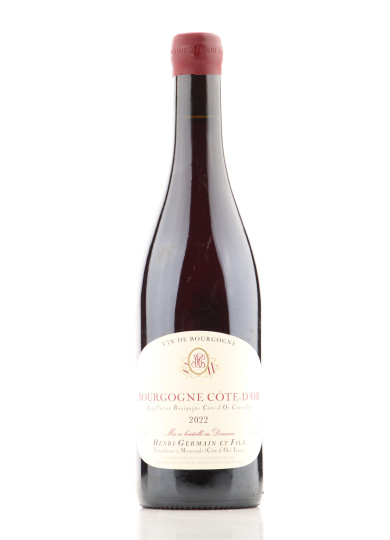
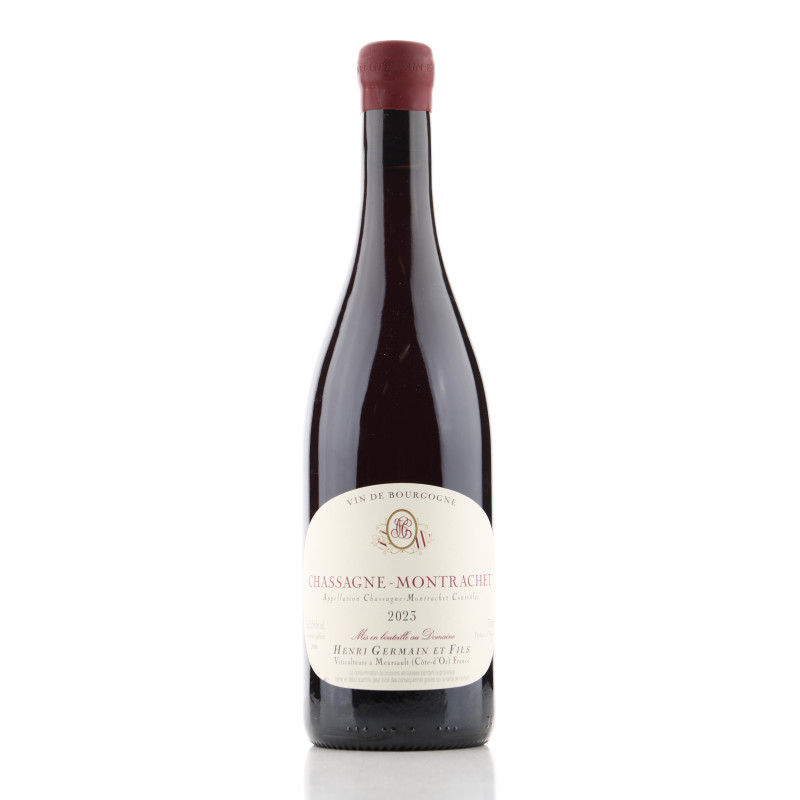
CHASSAGNE MONTRACHET ROUGE 2023 HENRI GERMAIN
€45.00
Bouteille
75 cl
Tasting

To the eye
Une robe or clair brillante et limpide, parée de superbes reflets paille qui témoignent de la belle concentration du vin.

Nose
D'une grande distinction, il s'ouvre sur des arômes de fruits blancs mûrs (poire Williams, pêche de vigne), de fleurs blanches et d'agrumes confits. L'aération dévoile toute la noblesse de son élevage avec de subtiles notes de noisette fraîche, de brioche, de craie et une fine touche iodée.

Palate
L'attaque est ample, riche et enveloppante, offrant une superbe mâche calcaire. Le milieu de bouche séduit par sa texture crémeuse et sa densité, parfaitement relancées par une colonne vertébrale fraîche et saline. La finale est longue, persistante, marquée par de délicates rémanences épicées et minérales.

Pairing
Ce grand Chassagne-Montrachet s'accordera à la perfection avec des mets raffinés de la mer ou des volailles nobles. Il sublimera un turbot rôti au beurre blanc, des Saint-Jacques poêlées, un poulet de Bresse à la crème et aux morilles, ou un beau poisson d'eau douce en sauce. Côté fromages, mariez-le avec un vieux Comté ou un Brillat-Savarin.

Aging potential
Magnifiquement armé par sa structure et la générosité de son millésime, ce vin blanc d'exception possède le potentiel pour vieillir harmonieusement en cave durant 8 à 12 ans, gagnant au fil du temps en complexité tertiaire.
Features
- Color Red
- Region Burgundy
- Designation Chassagne Montrachet
- Vintage 2023
- Format Bouteille
- Domain HENRI GERMAIN
- Capacity 75 cl
These products might interest you

Wines selected
by our experts

Order and pay
securely

100% of the wines
in stock

Free delivery
from 250€ in France

Your favorite wines
at your fingertips

Ban on the sale of alcoholic beverages to minors under 18 years of age
Proof of majority of the buyer is required at the time of online sale
Le barème établi par Robert Parker évalue les vins sur une échelle allant de 50 à 100 points afin d’aider les consommateurs à choisir leurs bouteilles. La grille de notation est la suivante :
96 à 100 Une cuvée grandiose : niveau exceptionnel.
90 à 95 Belle complexité aromatique, bel équilibre : niveau excellent.
80 à 89 Grande intensité aromatique, finesse et équilibre : bon niveau.
70 à 79 Plaisant, peu de complexité : niveau moyen.
60 à 69 Quelques défauts perceptibles : niveau très moyen.
50 à 59 Détection de défauts, manque d'équilibre : niveau acceptable.